Gut health
Yogurt, Kefir, and Fermented Foods: What They Can Offer Vaginal Health
Understand live cultures, fermentation, prebiotic foods, and why a nutritious food is not automatically a vaginal-health treatment.
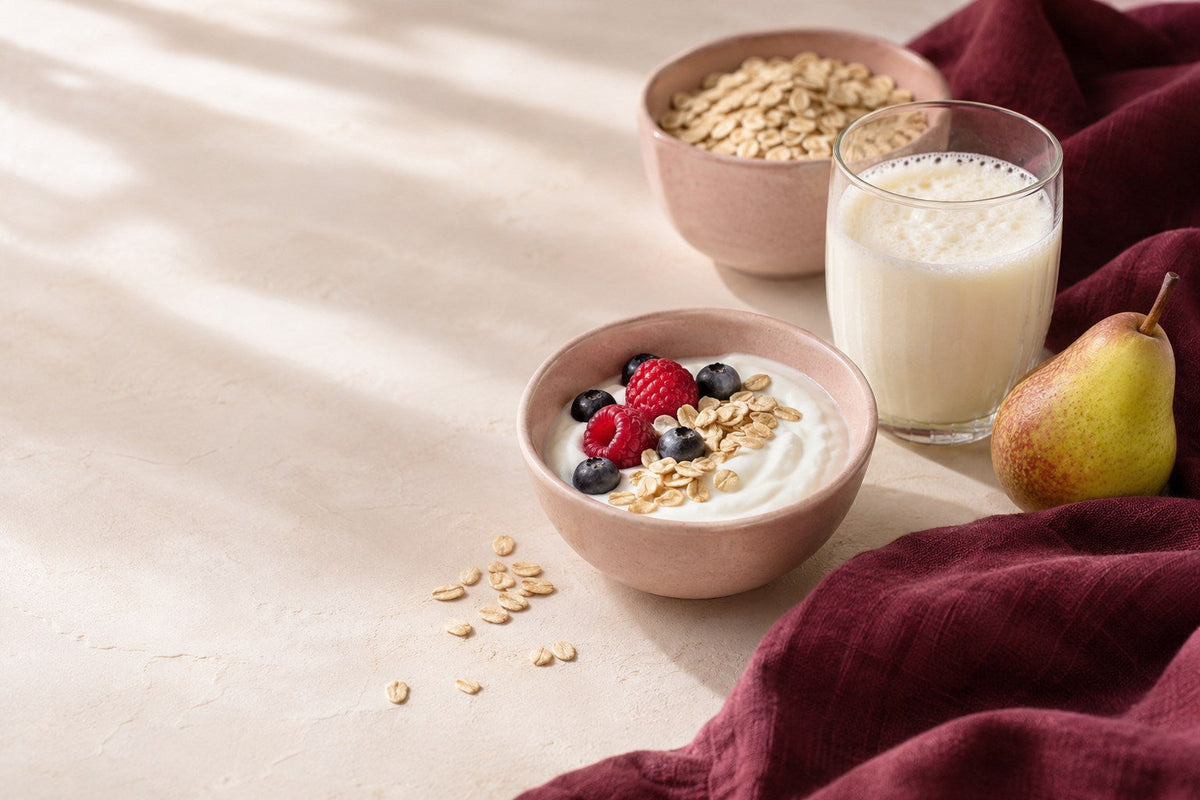
Yogurt and kefir are often recommended in conversations about vaginal health because they can contain live cultures. They can be useful foods, but eating them is not the same intervention as taking a studied vaginal probiotic—and neither should be confused with treating an active infection.
The most useful question is what each food contributes to your diet and what the research actually measured.
What makes a food fermented?
Fermentation uses microorganisms to transform components of a food. The process can change taste, texture, acidity, and composition.
Yogurt, kefir, sauerkraut, kimchi, and some other foods are made through fermentation. However, the finished products differ substantially in their ingredients, organisms, and processing.
The ISAPP consensus on fermented foods distinguishes fermentation from a specific probiotic claim. A fermented food does not automatically contain a documented probiotic strain in a proven dose.
Some fermented foods no longer contain live organisms when eaten, particularly after certain heating processes. Others contain live cultures but have not been studied for the particular health outcome a customer wants.
Yogurt and kefir are not identical
Yogurt is typically produced using specific starter cultures. Some manufacturers add other organisms, including strains with research for particular uses.
Kefir is produced through a more complex fermentation involving bacteria and yeasts. Its exact microbial composition can vary with the production method and product.
Both can contribute nutrients as foods, but the number and identity of live organisms are not necessarily standardized in the same way as a specific clinical intervention.
A label that says “live cultures” tells you something useful. It does not, by itself, tell you whether the product contains a strain studied for vaginal symptoms.
What does research on fermented foods show?
A randomized dietary study compared approaches emphasizing high-fiber or high-fermented-food intake. The fermented-food intervention was associated with increased gut microbial diversity and changes in inflammatory markers.
Those findings are relevant to diet and intestinal biology. The trial did not establish that fermented foods treat BV, eliminate Candida, or prevent vaginal recurrence.
This distinction does not reduce the value of the food. It keeps the benefit tied to the question that was studied rather than adding a vaginal outcome that was not measured.
How could food relate to vaginal health?
Nutrition supports the body as a whole, including immune function and tissue health. Dietary substrates also influence intestinal microbial activity.
The gut and vaginal environments have biological connections, but they remain different sites. An effect measured in the intestine cannot simply be assumed in the vagina.
For example, “greater microbial diversity” can be discussed positively in some gut research, while a Lactobacillus-dominant vaginal community is relatively less diverse. The meaning of a microbial change depends on the location.
A varied diet is a reasonable foundation. It does not require treating every meal as a way to engineer a particular vaginal bacterial species.
What about prebiotic foods?
Prebiotics are substrates that certain microorganisms use in ways that benefit health. Some foods contain studied prebiotic components, while many others contribute fiber without necessarily meeting that specific definition.
The prebiotic consensus explains why “fiber” and “prebiotic” overlap but are not identical terms.
You can include oats, beans, fruit, vegetables, nuts, and seeds for dietary variety without assigning each one a vaginal-health claim. If you are increasing fiber, do it gradually and consider your own tolerance.
There is no requirement to combine a fermented food with a particular ingredient at every meal.
Can yogurt help an active yeast infection?
Yogurt should not replace appropriate antifungal treatment. A food’s live cultures do not establish a treatment dose, and symptoms attributed to yeast may have another cause.
The CDC’s candidiasis guidance does not support probiotics as an established treatment for vulvovaginal candidiasis. That includes avoiding the assumption that an everyday food will function like a medicine.
Do not insert yogurt, kefir, garlic, or other foods into the vagina. Foods are not formulated or evaluated for that use and can introduce irritation or other unwanted material.
Does sugar in yogurt make yeast worse?
The relationship between blood glucose, diabetes, and candidiasis is not the same as the claim that one serving of sweetened yogurt directly causes a vaginal yeast infection.
Choose foods according to your nutritional needs, preferences, and any medical advice relevant to you. If you have diabetes, managing blood glucose matters; an extreme “Candida diet” is not a substitute for that care or for diagnosing recurring symptoms.
For most readers, the practical choice is a yogurt or kefir they enjoy and tolerate. There is no need to force down a food you dislike because it is presented as essential vaginal care.
Food and supplements can serve different purposes
Food provides nutrients, energy, enjoyment, and a dietary pattern. A supplement provides a labeled preparation intended for a particular use.
Hello Flora’s Hello Balance is an oral prebiotic-and-probiotic supplement. It can be explored as a separate product choice while yogurt, kefir, or other foods remain part of meals you enjoy.
The NIH consumer fact sheet recommends paying attention to organism identities and product information. A capsule is not automatically superior to a food, and a food is not automatically equivalent to a researched capsule.
Ways to include fermented foods comfortably
Start with a food you already like. Yogurt with fruit, kefir alongside breakfast, or a small serving of fermented vegetables can fit into ordinary meals.
Check labels for milk ingredients, added sugar, salt, and culture information according to your needs. If a product causes persistent digestive discomfort, choose another option rather than treating discomfort as proof that fermentation is “working.”
Frequently asked questions
Do all yogurts contain vaginal probiotic strains?
No. Culture composition varies, and familiar yogurt starter cultures are not interchangeable with strains studied for vaginal outcomes.
Is homemade kefir better?
Not automatically. The organisms and processing can vary, and more microbial variety does not establish a greater vaginal benefit. Food safety and personal tolerance still matter.
How much should I eat for vaginal health?
There is no established yogurt or kefir serving that reliably treats vaginal symptoms. Include these foods as foods, and address symptoms with condition-specific care.
Can I eat fermented foods while taking a probiotic?
Many people do, but there is no universal requirement to combine them. Consider the full diet, product directions, and your tolerance.
References
- Marco et al. (2021). ISAPP consensus statement on fermented foods.
- Wastyk et al. (2021). Gut-microbiota-targeted diets modulate human immune status.
- Gibson et al. (2017). ISAPP consensus statement on the definition and scope of prebiotics.
- NIH Office of Dietary Supplements. Probiotics: Consumer Fact Sheet.
- CDC. Vulvovaginal Candidiasis: STI Treatment Guidelines.
More from Hello Flora Wellness

Daily wellness
How Long Do Vaginal Probiotics Take to Work? Understanding the Timeline
Understand what probiotic studies measure, why timelines differ, and how to set a useful review point without delaying symptom care.
Read more: How Long Do Vaginal Probiotics Take to Work? Understanding the Timeline
Daily wellness
How to Take a Probiotic: Timing, Storage, Missed Servings, and Daily Use
A practical guide to meal timing, serving directions, medication questions, storage, travel, and reviewing a supplement routine.
Read more: How to Take a Probiotic: Timing, Storage, Missed Servings, and Daily Use
Probiotics & ingredients
How to Choose a Vaginal Probiotic: Ingredients, Research, and Quality
A step-by-step framework for comparing organism identities, relevant studies, potency, quality information, and practical fit.
Read more: How to Choose a Vaginal Probiotic: Ingredients, Research, and Quality